
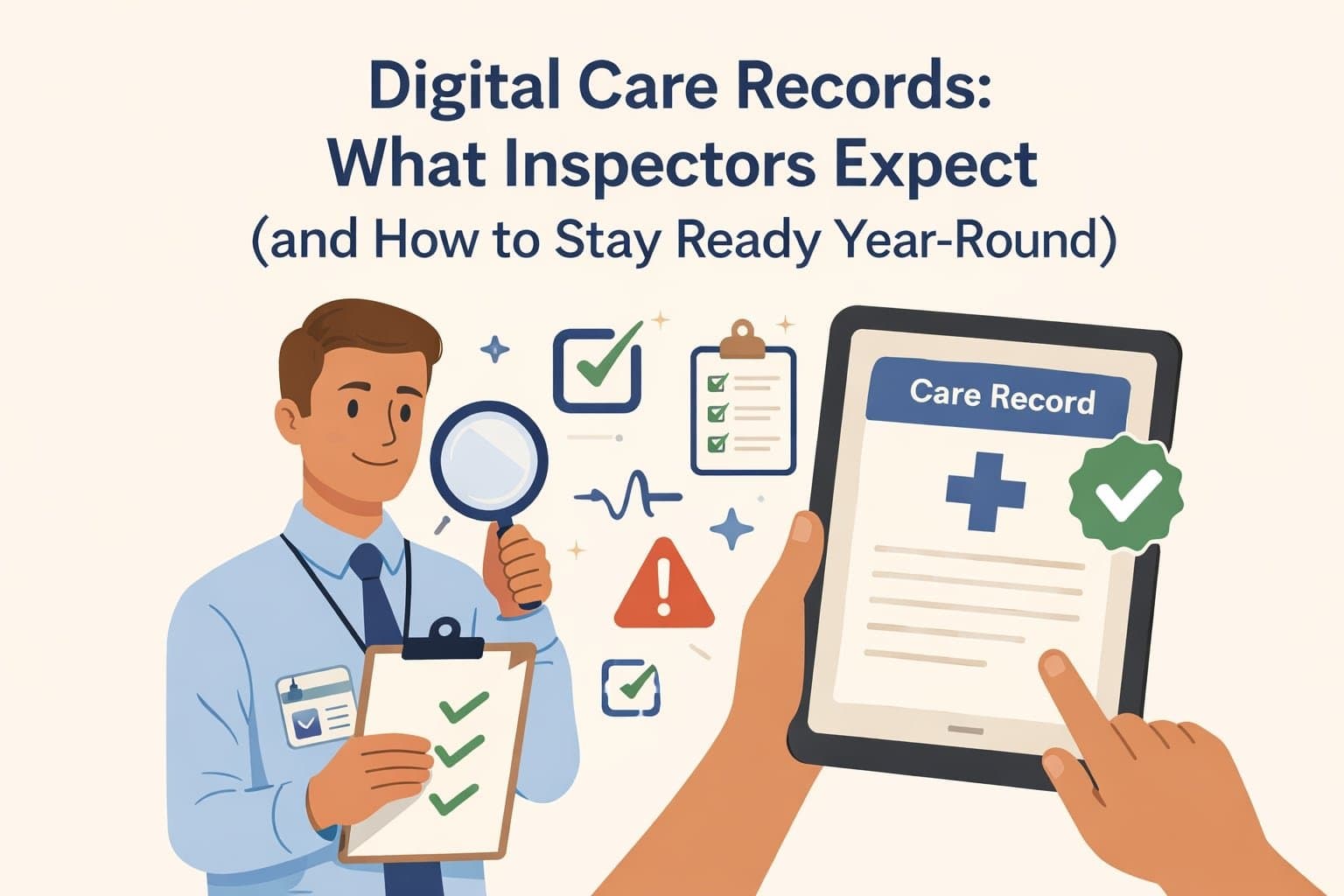
Digital care records can make inspections easier — but only if your records are clear, accurate, secure, and used properly day to day.
Inspectors aren’t impressed by “we’ve gone paperless”. They want to see safe, person-centred care, and managers who can evidence oversight and learning all year round.
Key idea: Your software is not the evidence. The quality of your recording — and what you do with it — is the evidence.
What inspectors expect from digital care records
When inspectors sample digital records, they usually check three things.
1) Records that support safe, person-centred care
Your records should show:
- needs, risks, and the controls in place
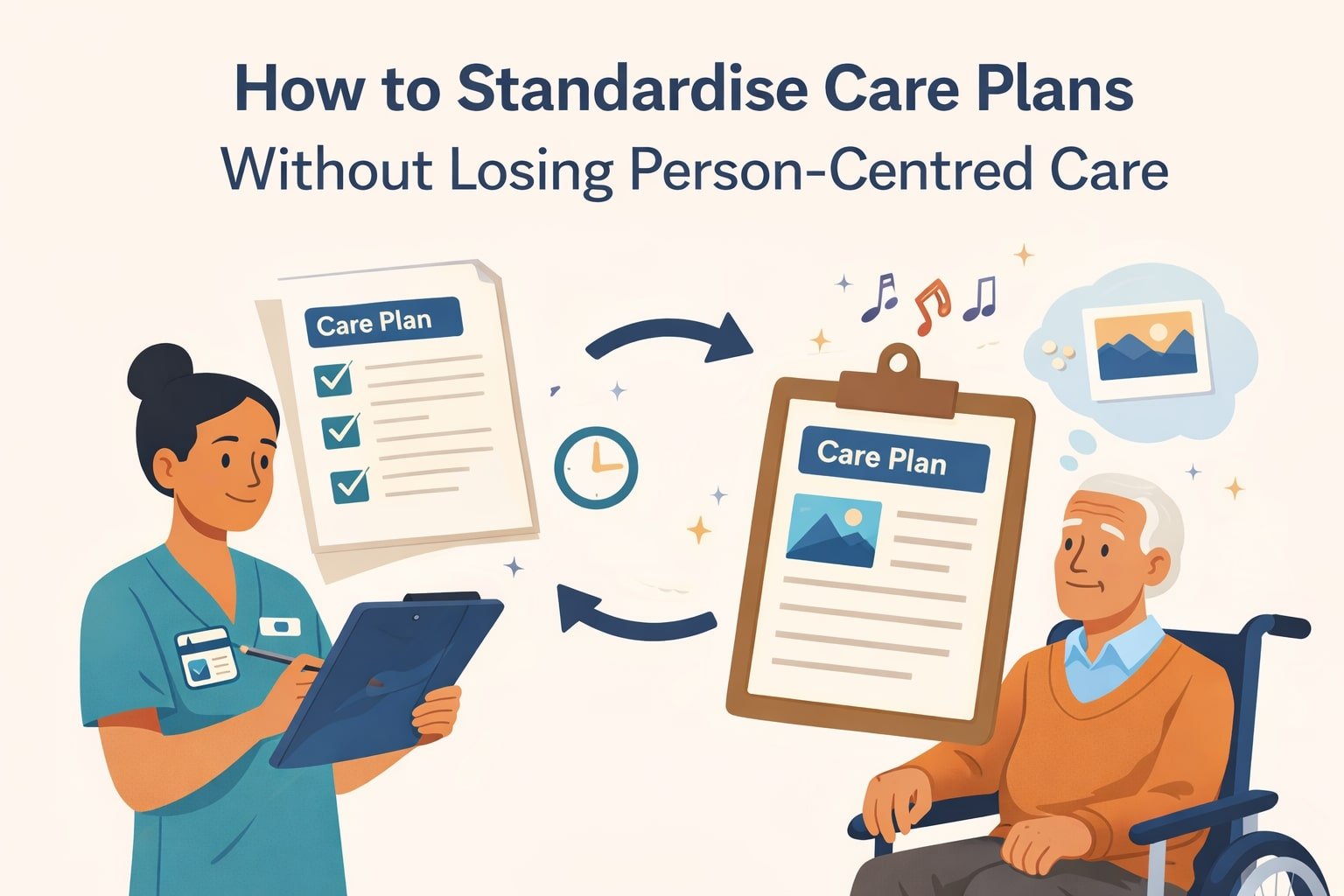
- care plans that reflect the person (preferences, routines, communication)
- consent/capacity decisions where relevant
- reviews that happen on time — and after changes
A quick test: could a new member of staff read the record and understand how to support the person safely today?
2) Notes that are timely, accurate, and specific
“Good” digital notes are:
- recorded close to the time
- factual (what you saw/heard)
- action-led (what you did and what happened next)
- consistent (no big gaps)
A simple standard for carers:
- What happened (facts)
- What you did (actions)
- What you escalated (who/when)
- What the outcome was (follow-up / change)
3) Governance you can evidence quickly
Digital records should help you demonstrate good governance:
- audits are happening and logged
- actions have owners and deadlines
- you re-check to prove impact
- themes are picked up (falls, missed meds, late calls, hydration)
Inspectors often focus on whether you can show the full loop: audit → action → impact.
What “good” looks like in the records (quick checks)
- Care plans: up to date and personalised.
- Risk assessments: clear hazards, controls, and review triggers (e.g., fall, hospital admission).
- Medication (e-MAR/MAR): clear reasons for omissions; errors lead to learning.
- Incidents/concerns: logged properly and linked to plan updates.
- Contacts: family/professionals calls recorded with advice and next steps.
How to stay ready year-round
You don’t need a big “inspection project”. You need a routine.
Weekly (30–60 minutes)
- spot check 5–10 records (mix of low and high risk)
- look for: late notes, missed tasks, unreviewed risks, unclear meds notes, missing escalations
- log actions with: owner + due date + how you’ll check improvement
Monthly (half day)
- run core audits (care plans, meds, risks, training, incidents)
- review themes: what keeps happening, and why?
- share learning with staff (a short update or toolbox talk)
Quarterly (1 hour)
- test your “evidence pack”: can you pull what you need in minutes?
- sample a few records end-to-end (plan → daily notes → incident → review)
Your digital inspection evidence pack
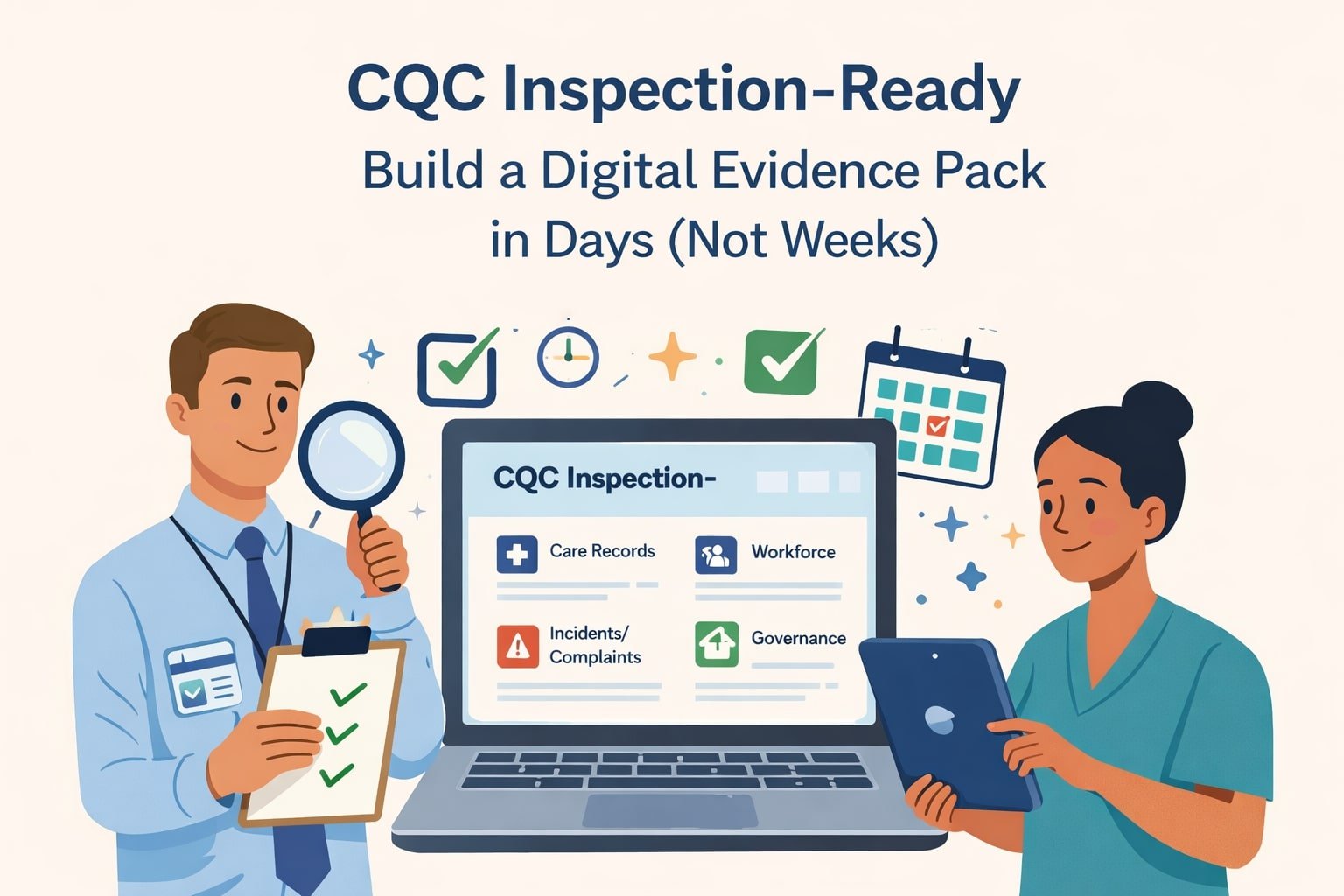
Keep one tidy folder (or dashboard):
- governance: audit calendar, minutes, action log
- care records: assessments, plans, reviews, risk assessments
- workforce: training matrix, supervision, competencies
- incidents/complaints: logs, investigations, outcomes
- information governance: access controls and key policies
If you can’t find it quickly, assume an inspector won’t either.
Common pitfalls (and quick fixes)
- Plans aren’t updated after changes → set review reminders and “change triggers”.
- Audits don’t lead to action → one action log; track completion and impact.
- Weak escalation evidence → train “record the call”: who, when, advice, next step.
- Copy-and-paste notes → spot checks + coaching; praise good examples.
How PlanLog helps you stay inspection-ready
PlanLog is care management software built for UK care providers (including domiciliary care, residential care, nursing homes, and supported living) to support daily recording and inspection readiness.
Key features include:
- Intelligent Care Planning (draft plans from risk assessments, review reminders, real-time updates)
- Risk Assessments (controls, history, alerts, reports)
- Medication Management (e-MAR) (rounds, MAR access, alerts, stock management)
- Audits (audit library, scoring, scheduling reminders, dashboards)
- Diary + Handover (task tracking, overdue alerts, shift summaries, archived records)
- Staff Management (profiles, training tracking, rota/shift scheduling, leave/absence tracking, PDF exports)
If an inspector called tomorrow (15-minute prep)
- pull 3 sample service user records (low, medium, high risk)
- open your latest audit results and action log (show what’s closed and what’s next)
- have your medication evidence ready (a MAR sample + one learning example)
- check your training matrix is current and supervision dates are recorded
- confirm access controls: who can see what, and how leavers are removed
FAQs
Do digital care records guarantee a good inspection?
No. They help you evidence good care, but outcomes depend on what staff record and how you lead improvement.
How many records should I spot check?
Start with 5–10 a week. Consistent checks build strong evidence over time.
What’s the fastest improvement you can make?
Standardise daily notes (facts, actions, escalation, outcome) and close the loop on audit actions.