
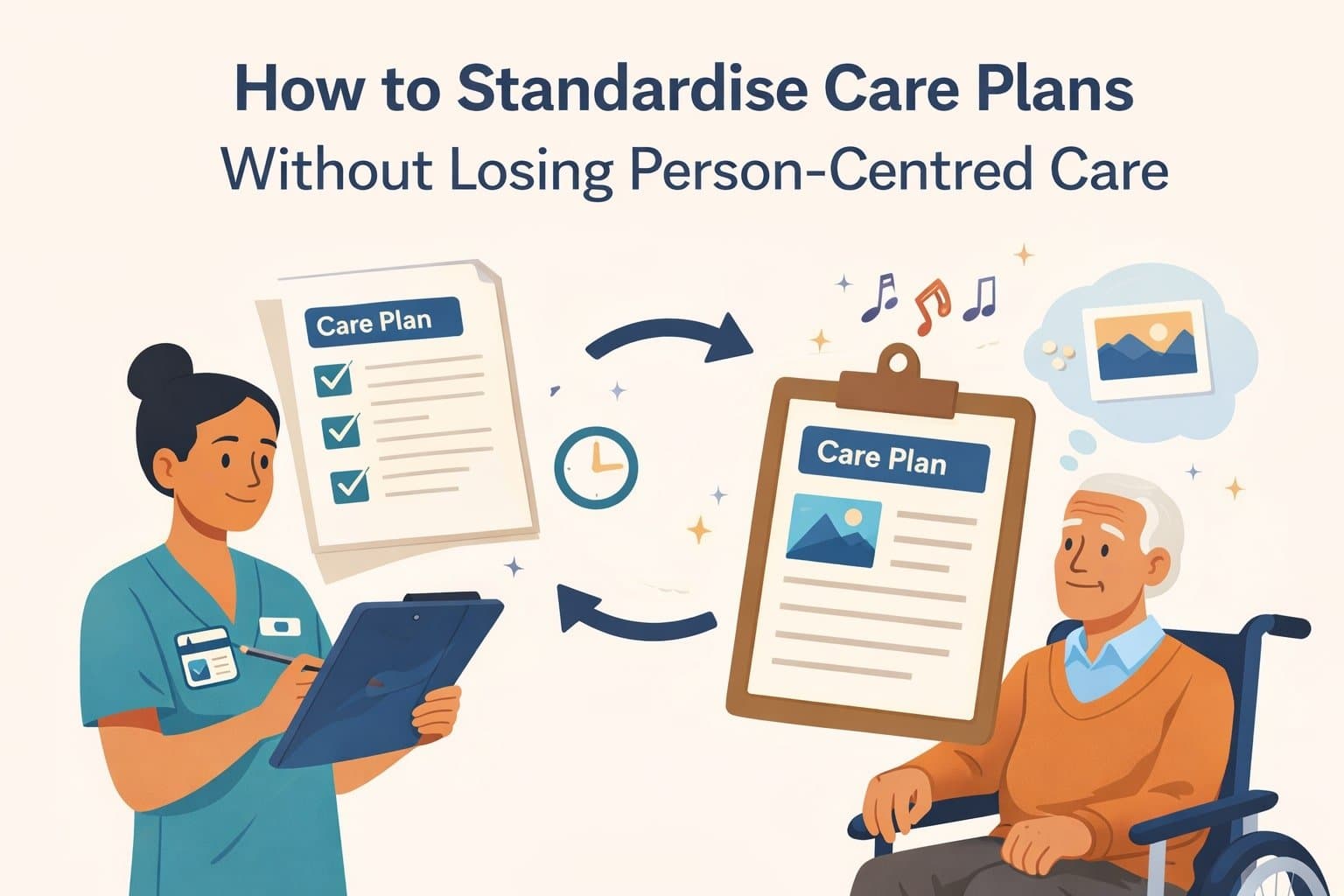
Standardising care plans can sound like you’re trying to make everyone the same. In good care, it’s the opposite. Standardising is about making sure the right information is always captured, easy to find, and kept up to date — while the care itself remains based on the person’s choices, routines, and goals.
If you run a care service, you’ll know the balance you’re trying to strike. Staff need plans that are quick to read and clear to follow. Managers need records that are consistent, reviewed, and easy to evidence. People receiving care need to feel seen and respected, not reduced to a checklist.
The aim is consistency in how you record care, not sameness in how you deliver care.
Key point: Standardise the structure and safety prompts, not the person. Keep the plan organised, but keep the content human.
Why standardisation matters (and why it often goes wrong)
Care plans usually become messy for three reasons.
First, different staff write in different styles. One person writes detailed notes, another writes very little. Important information gets buried or missed.
Second, key information is in the wrong place. Risks are written in one document, instructions in another, and daily notes somewhere else. Staff waste time searching.
Third, reviews happen “because it’s due”, not because needs changed. The plan gets updated on a schedule, but not when something important happens.
Standardisation fixes these problems by making sure everyone records information in a consistent way — which supports safe care and makes day-to-day work easier.
What “standardising care plans” should actually mean
Standardising should mean the plan is organised the same way for every person, so staff always know where to look. It should mean the plan always includes the essentials: needs, outcomes, risks, consent/capacity where relevant, and what staff should do. It should also mean the plan is updated using the same basic process, so changes don’t get lost.
It should not mean copying and pasting generic wording, writing plans in clinical language that people don’t understand, or treating people’s preferences as “nice extras”.
How to keep care plans person-centred while making them consistent
Write so a new starter can deliver care safely
A care plan is only useful if it can be followed at pace. Use plain British English, short sentences, and clear instructions. Avoid phrases like “as required” or “assist as needed” unless you explain what that looks like in practice.
Person-centred doesn’t mean long. It means specific.
Capture what matters to the person, not just what staff do
Many care plans focus on tasks: wash, dress, prompt medication, prepare lunch. But person-centred care plans also show what a “good day” looks like for the person, what they want to keep doing for themselves, and what support helps them feel safe and in control.
This keeps care focused on outcomes, not routines.
Make preferences and communication impossible to miss
Some of the most important details are also the easiest to skip when you’re rushing: how the person likes to be addressed, what they find upsetting or frightening, what helps when they’re anxious or distressed, and any cultural, faith, or sensory needs.
If these details are hidden in long paragraphs, staff will miss them. Keeping them clear and easy to find protects dignity and reduces incidents.
Link risks to actions, not just warnings
Risk information is only helpful if it tells staff what to do. A risk section should make it obvious what the risk is, what makes it more likely, what staff should do to reduce it, and what to record and when to escalate.
This is where standardisation improves safety. It also supports better audits, because actions and records are easier to check.
Standardise decisions, not people
You can be consistent about how you make decisions (and document them), while still adapting to the person.
Examples of decisions you can standardise include how you record consent and best-interest decisions (where relevant), how you record changes in mobility, nutrition, skin integrity, or cognition, how you record and respond to refusals, and how you hand over changes between shifts and teams.
A consistent process reduces missed information and protects both the person and your staff.
Reviews: the key to standardisation that doesn’t feel “box-ticky”
Most services have review dates. The stronger approach is using two triggers.
First, time-based reviews. Regular reviews help keep plans current.
Second, event-based reviews. Some changes should trigger a review straight away, for example falls or near-misses, safeguarding concerns, hospital admission or discharge, medication changes, repeated refusals, and noticeable weight loss, dehydration, or increased confusion.
When you review plans based on real events, the care plan stays meaningful — and person-centred care improves because support matches what’s happening in the person’s life.
How digital systems can help (without removing the human side)
Digital care planning can improve standardisation by keeping information in one place, using reminders and alerts, and making updates quicker. The key is making sure technology supports care rather than replacing judgement.
Features like structured care planning, risk assessments, audits, handover notes, diaries/tasks, and medication management can help teams stay consistent — while still recording personal preferences, outcomes, and day-to-day changes in a way staff can use.
FAQs
Does standardising care plans reduce person-centred care?
No — not if you standardise the layout and prompts, and keep the content focused on the person’s goals, choices, and routines.
What’s the quickest way to improve care plan consistency?
Agree one writing style across the service: plain English, clear actions, and important personal details easy to find. Then make sure reviews happen when needs change, not just when dates are due.
How do we stop plans becoming long and unreadable?
Keep the plan easy to scan. Use short sections, clear wording, and avoid repeating the same information in multiple places.